



























Arsenal changed almost everything.
The quality remained.
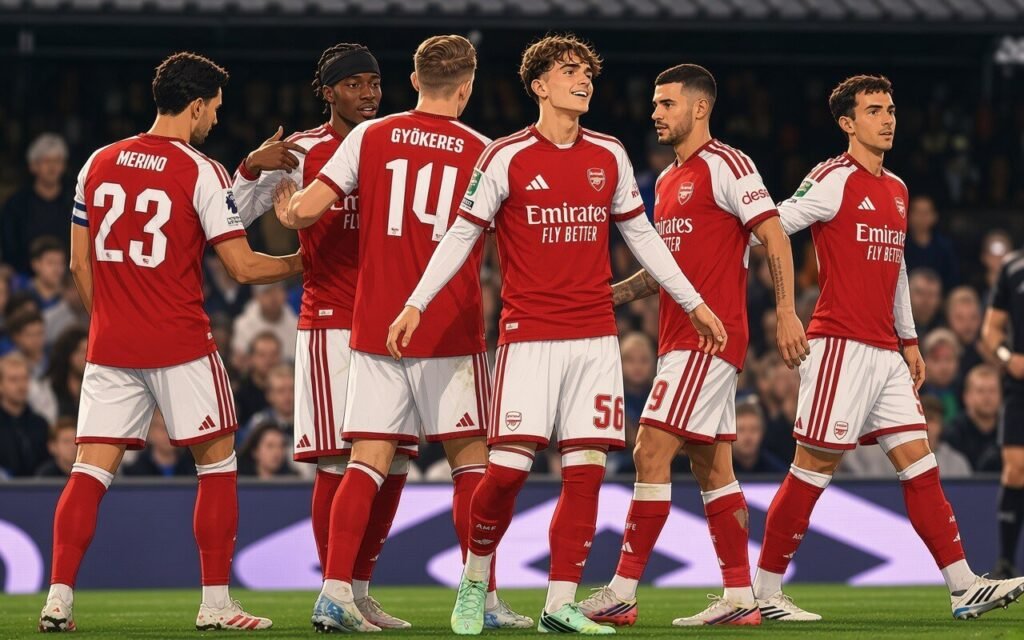
Mikel Arteta made nine changes to the side that had beaten Sunderland in the Premier League. However, Arsenal still travelled to Portman Road and produced a commanding 4-2 victory over Ipswich Town in the third round of the Carabao Cup.
The headline belonged to Max Dowman.
At just 16 years old, the Arsenal youngster scored twice and played a major role in another goal, delivering the kind of performance that transforms a promising academy player into a name the wider football world begins to remember.
Noni Madueke and Mikel Merino also scored as Arsenal raced into a 4-0 lead.
Ipswich responded through Anis Mehmeti and former Arsenal striker Chuba Akpom, but the recovery came too late to seriously threaten Arteta’s side.
The final score was Ipswich 2-4 Arsenal.
But this match was about much more than progression to the fourth round.
It was about squad depth.
It was about youth.
Above all, it was about a teenager playing with the confidence of someone who looked entirely comfortable at the senior level.
Ipswich vs Arsenal: Match Snapshot
| Match Detail | Information |
|---|---|
| Final Score | Ipswich Town 2-4 Arsenal |
| Competition | Carabao Cup Third Round |
| Venue | Portman Road |
| Arsenal Scorers | Max Dowman 7’, 47’, Noni Madueke 16’, Mikel Merino 58’ |
| Ipswich Scorers | Anis Mehmeti 62’, Chuba Akpom |
| Standout Player | Max Dowman |
| Key Tactical Theme | Arsenal’s rotated midfield and wide players repeatedly exploited Ipswich’s defensive spacing |
| Major Arsenal Story | Max Dowman scored the first senior brace of his career |
| Result | Arsenal advance to the Carabao Cup fourth round |
Dowman Needed Only Seven Minutes
The match was barely seven minutes old when Arsenal took control.
Eberechi Eze found Max Dowman, and the teenager finished calmly to put Arsenal ahead.
There was no hesitation.
No sign of nerves.
Just a clean attacking action and a composed finish.
That matters.
Young players often enter senior football with obvious technical quality but struggle with the speed at which decisions have to be made.
Dowman looked different.
He did not appear to be waiting for the match to slow down.
He played at its speed immediately.
His positioning was intelligent.
His first touch repeatedly moved him away from pressure.
And when Arsenal found him between the lines, Ipswich struggled to decide whether a midfielder or defender should step out to confront him.
That uncertainty gave Dowman space.
He punished it.
Arsenal’s Shape Was More Interesting Than the Scoreline
Arteta’s starting XI was heavily rotated, but it was not experimental in the careless sense.
There was a clear structure.
Arsenal effectively used a 4-2-3-1, with Bruno Guimarães and Mikel Merino giving the team a stable midfield platform.
Dowman operated in advanced areas, while Eze and Madueke provided creativity and width around Viktor Gyökeres.
The most interesting tactical element was the way Arsenal tried to create overloads around Ipswich’s midfield line.
Guimarães often dropped slightly deeper to receive possession.
Merino moved forward when space opened.
That allowed Arsenal to create passing triangles around Ipswich’s press rather than simply forcing the ball into crowded central areas.
Once Ipswich stepped forward, Arsenal played beyond them.
That pattern appeared repeatedly.
And it became even more dangerous whenever Dowman drifted inside.
He was not glued to one position.
Sometimes he appeared between the lines.
Sometimes he moved toward the right half-space.
Sometimes he attacked the penalty area.
That movement made him extremely difficult to track.
Madueke Punishes Another Ipswich Error
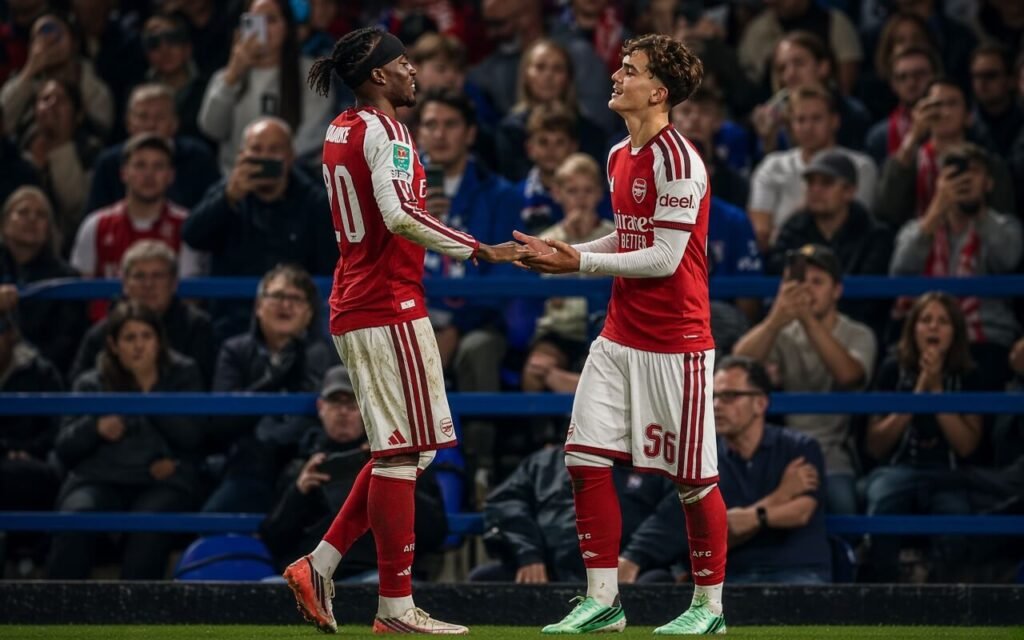
Arsenal doubled their advantage in the 16th minute.
This time Ipswich contributed heavily to their own problems.
A mistake at the back allowed Arsenal to regain possession high up the pitch, and Noni Madueke took advantage.
He finished calmly to make it 0-2.
Again, the goal highlighted Arsenal’s biggest tactical strength on the night.
They were aggressive after losing possession.
Instead of dropping immediately into a deeper block, Arteta’s side attempted to recover the ball close to Ipswich’s penalty area.
That meant Ipswich rarely had comfortable time in possession.
Even when the hosts tried to build from the back, Arsenal’s attacking players immediately closed passing lanes.
Madueke benefited directly from that pressure.
Ipswich wanted to play.
Arsenal rarely let them breathe.
Ipswich Still Found Spaces of Their Own
The first half was not completely one-sided.
Ipswich created moments through wide areas, particularly when Arsenal’s rotated defensive structure became stretched.
Arsenal’s back line itself was unusual.
Martin Zubimendi started in defence.
Myles Lewis-Skelly also played in a deeper role.
Marli Salmon was given an opportunity.
The lack of a completely natural defensive unit occasionally showed.
Ipswich attempted to exploit those unfamiliar relationships through crosses and quick switches of play.
They created several situations around Arsenal’s box, but the final delivery or finish was often lacking.
That would later become relevant.
Arsenal were clearly the better side.
But they were not completely secure.
Dowman Strikes Again Immediately After Half-Time
Any hope Ipswich had of building momentum after the break disappeared almost immediately.
Two minutes into the second half, Dowman scored again.
This time the assist came from Martin Zubimendi.
Dowman received the ball centrally and finished with his left foot into the bottom corner.
Ipswich 0-3 Arsenal.
This was the moment the game moved beyond Ipswich.
And it was also the moment Dowman’s performance moved beyond simply being “promising.”
A teenager scoring once in a cup match can be celebrated as a breakthrough.
Scoring twice while consistently influencing Arsenal’s attacking structure is something else.
Dowman was not simply present.
He was dictating moments.
That distinction matters.
Why Dowman’s Performance Was So Impressive
There is always danger in overhyping young players.
Football has seen countless teenagers dominate one match and then struggle under the weight of expectations.
Arsenal know that.
Arteta has been careful with Dowman.
That caution should continue.
But it is equally important not to understate what happened at Portman Road.
Dowman showed three qualities that translate well to senior football.
Decision-making.
He rarely held the ball unnecessarily.
Movement.
He constantly looked for spaces behind Ipswich’s midfield.
Composure.
Both goals were taken with control rather than desperation.
Those qualities are more meaningful than tricks or highlight clips.
They suggest a player who understands the game.
That is why the performance should excite Arsenal supporters.
Merino Makes It Four
In the 58th minute, Mikel Merino effectively ended the contest.
Arsenal worked possession around the edge of the Ipswich penalty area before Merino found space and finished from distance.
0-4.
At that point, Arsenal had scored four times with four different types of attacking action.
A structured passing move.
A high turnover.
A transition into Dowman.
A midfield runner arriving around the box.
That variety matters.
It suggested Arsenal were not relying on one single route to goal.
Even with a heavily rotated side, Arteta’s attacking principles remained visible.
The personnel changed.
The structure did not disappear.
That is usually a sign of a well-coached team.
Ipswich Finally Respond
Four goals down, Ipswich could easily have collapsed.
They did not.
Anis Mehmeti pulled one back in the 62nd minute after Ipswich worked the ball into a dangerous wide position.
Jack Clarke created the opening before Mehmeti finished.
The goal exposed Arsenal’s main weakness on the night.
Their defensive relationships were not completely natural.
With several players operating outside their most familiar roles, Arsenal sometimes struggled to track runners around the edge of the area.
That problem appeared again later.
And it gave Ipswich some reward for continuing to attack.
Chuba Akpom Adds an Emotional Twist
The second Ipswich goal carried a different meaning.
Chuba Akpom, a graduate of Arsenal’s Hale End academy, scored against his former club.
The Arsenal supporters still responded warmly.
Reports from Portman Road noted that travelling fans sang for Akpom, recognising his connection to the club even after he had scored against them.
That was one of the best small moments of the night.
Football often treats transfers as clean breaks.
They rarely are.
Academy players can leave and still retain a connection with supporters who watched them grow.
Akpom’s goal made the scoreline 2-4.
It did not change the outcome.
It added another layer to the story.
Arsenal’s Squad Depth Was the Real Winner
Dowman will take the headlines.
He deserves them.
But Arteta may have been equally pleased by something less glamorous.
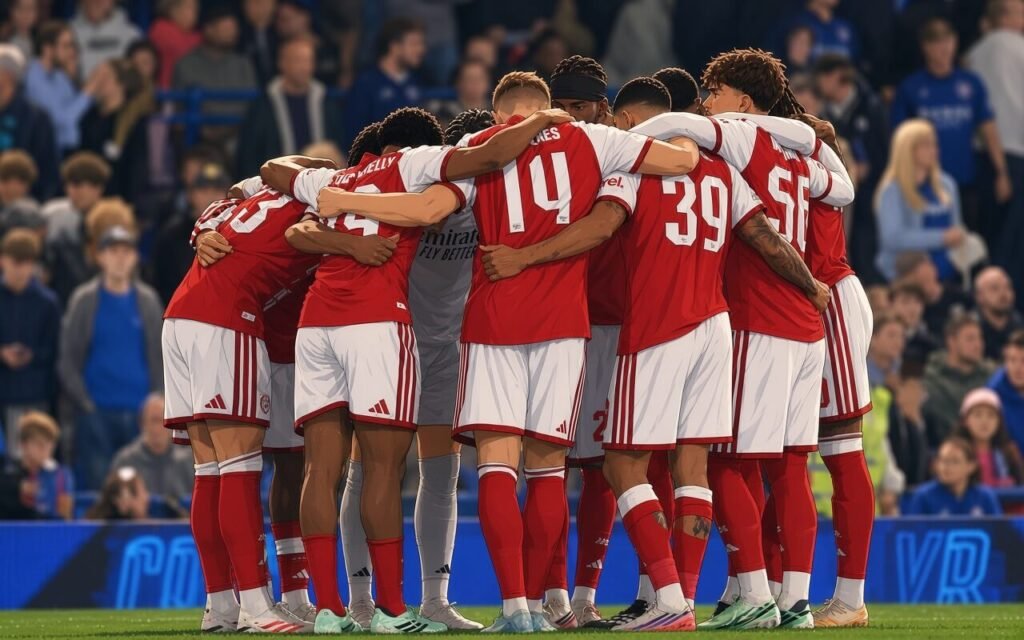
Arsenal changed nine players and still looked recognisably like Arsenal.
That is crucial.
The modern football calendar is relentless.
Premier League matches.
Champions League fixtures.
Domestic cups.
International breaks.
No serious title contender can survive by relying on 11 players.
Arsenal’s ability to rotate while maintaining tactical identity is therefore extremely valuable.
Bruno Guimarães gave the midfield control.
Merino contributed a goal.
Madueke scored.
Eze created.
Dowman dominated.
Even players operating in unfamiliar defensive positions remained composed for long periods.
That is what squad depth should look like.
Not simply having more players.
Having players capable of maintaining the same idea.
Gyökeres Had a Quiet Night
Not every Arsenal player enjoyed the same success.
Viktor Gyökeres had a much quieter evening.
The striker worked hard and occupied Ipswich’s centre-backs, but he was not heavily involved in Arsenal’s most dangerous moments.
That will inevitably create discussion.
Arsenal have attacking competition.
Kai Havertz remains an option.
Other players can operate centrally.
Gyökeres therefore needs to produce more consistently when given opportunities.
But it would be too simplistic to judge his performance solely through goals.
His movement still created spaces for Dowman and Arsenal’s attacking midfielders.
Strikers sometimes influence matches by dragging defenders away from the zones others want to attack.
Dowman benefited from exactly that kind of movement.
Still, the pressure for goals will remain.
Arteta’s Rotation Worked
This kind of match can become awkward for elite teams.
Rotate too heavily and rhythm disappears.
Play too many first-team stars and fatigue becomes unnecessary.
Arteta found the balance.
Nine changes created opportunity.
But the team still contained enough senior quality to control the tie.
That is smart squad management.
Arsenal have bigger objectives this season.
They are defending the Premier League title.
They are competing in the Champions League.
The Carabao Cup therefore has to be approached intelligently.
Arteta did not disrespect the competition.
He used it.
Young players gained experience.
Squad players gained minutes.
And Arsenal progressed.
That is almost the perfect cup outcome.
The Defensive Concessions Still Matter
A 4-2 away victory should not be overanalysed negatively.
But Arsenal will still review the two goals conceded.
Both arrived after the match was effectively won.
That can sometimes lead to concentration dropping.
It should not.
Elite teams develop habits through every minute.
Ipswich exposed some uncertainty around Arsenal’s reshuffled defensive line and showed that the structure became less compact once the game opened up.
Arteta will not panic.
He will notice.
There is a difference.
The victory was convincing.
The defensive finish was not.
What This Means for Arsenal
Arsenal are through to the fourth round of the Carabao Cup.
That is the immediate consequence.
The more interesting consequence is what Arteta learned.
Dowman can influence senior matches.
Madueke is capable of contributing when rotated into the side.
Merino remains useful around the penalty area.
Guimarães can control games even alongside changed personnel.
And Arsenal have enough depth to make major changes without losing their identity.
That last point may matter most over the full season.
Arsenal’s ambitions extend far beyond this competition.
They want the Premier League.
They want to compete seriously in Europe.
Matches like this are therefore valuable because they reveal whether the second layer of the squad can carry responsibility.
Against Ipswich, the answer was largely yes.
Football Today Media Verdict
Arsenal won 4-2.
Max Dowman won the night.
At 16, the teenager produced the kind of performance that forces everyone to pay attention.
Two goals.
Intelligent movement.
Composure.
Confidence.
And most importantly, influence.
But reducing the match to one wonderkid would ignore the bigger Arsenal story.
Arteta made nine changes and still saw his team dominate the structure of the game.
The pressing remained aggressive.
The midfield remained organised.
The attacking patterns remained recognisable.
That is what serious squad depth looks like.
Ipswich deserve credit for refusing to collapse.
Mehmeti gave them hope.
Akpom gave their supporters another moment.
But Arsenal had already done too much damage.
The most encouraging part for Arteta is that the players responsible were not simply his usual stars.
They were the next group.
And one of them may soon stop being described as part of the next group at all.
Max Dowman did not look like a 16-year-old being introduced to senior football.
He looked like a senior footballer who happened to be 16.
That is a very different thing.
Sources
The Guardian — Ipswich Town 2-4 Arsenal: Carabao Cup Third Round
Detailed match coverage confirming Dowman’s double, Madueke and Merino’s goals, Ipswich’s response and Arsenal’s progression.
ESPN — Ipswich 2-4 Arsenal Match Analysis
Provides additional match analysis and confirms the final result and Carabao Cup context.
EFL — Carabao Cup Round Three
Official competition source for the Carabao Cup third-round schedule and tournament context.