








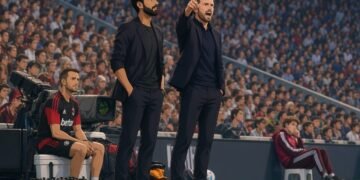


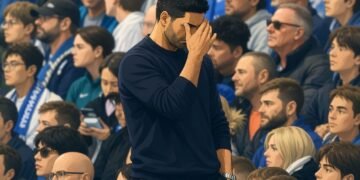
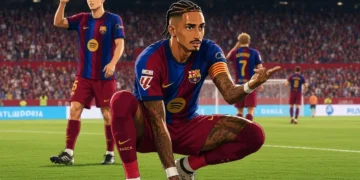








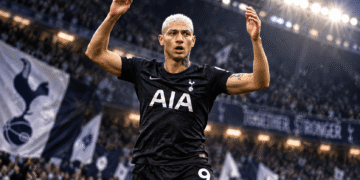



Jürgen Klopp was two minutes away from the perfect beginning.
Then one of his former Liverpool players ruined it.
Cody Gakpo scored in the 92nd minute as the Netherlands rescued a 1-1 draw against Germany in their UEFA Nations League opener at the Johan Cruijff Arena, denying Klopp victory in his first match as Germany head coach.
Felix Nmecha had given the visitors the lead after 32 minutes.
For much of the second half, Germany protected that advantage through discipline, counter-attacking threat and an outstanding performance from Marc-André ter Stegen.
Eventually, the pressure became too much.
Ruben van Bommel delivered from the right.
Gakpo attacked the ball.
Volley.
Goal.
1-1.
For new Netherlands coach Xavi Hernández, it was a deserved reward for an increasingly dominant second-half performance.
For Klopp, it was both promising and frustrating.
Germany showed clear signs of his influence.
They pressed aggressively.
Attacked quickly.
Created several dangerous transitions.
But by full-time, the statistics revealed something else:
Germany had spent too much of the second half surviving.
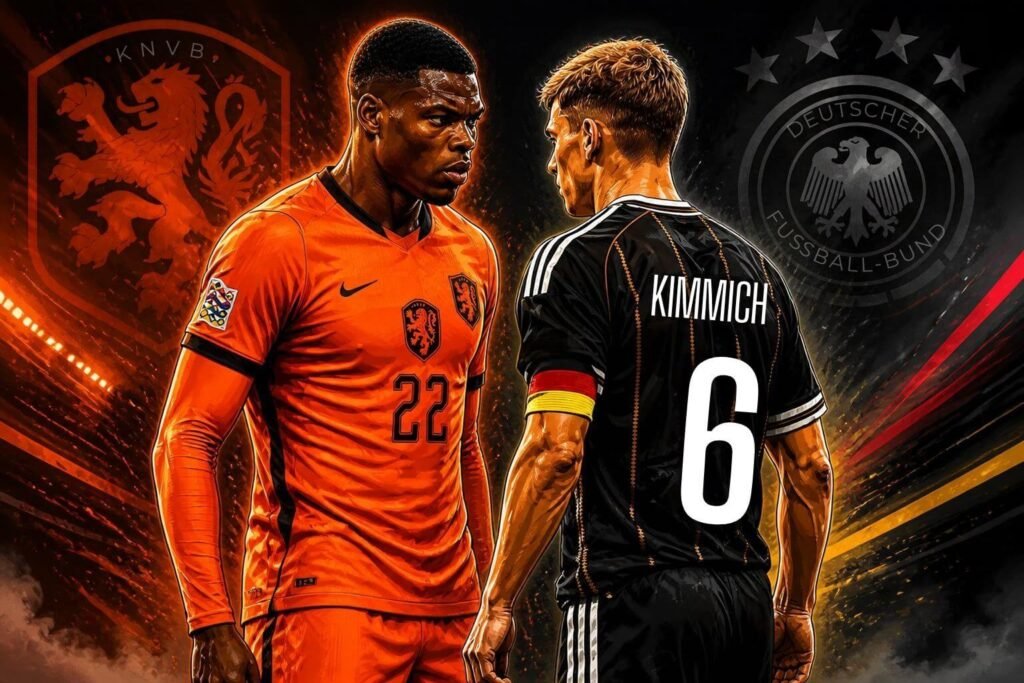
Netherlands vs Germany: Match Snapshot
| Match Detail | Information |
|---|---|
| Final Score | Netherlands 1-1 Germany |
| Competition | UEFA Nations League – League A, Group 2 |
| Date | September 24, 2026 |
| Venue | Johan Cruijff Arena, Amsterdam |
| Netherlands Scorer | Cody Gakpo 90+2’ |
| Germany Scorer | Felix Nmecha 32’ |
| Possession | Netherlands 54% – 46% Germany |
| Shots | Netherlands 22 – 10 Germany |
| Shots on Target | Netherlands 10 – 2 Germany |
| Expected Goals | Netherlands 3.12 – 1.50 Germany |
| Corners | Netherlands 12 – 1 Germany |
| Big Chances | Netherlands 4 – 2 Germany |
| Standout Performer | Marc-André ter Stegen |
| Key Tactical Theme | Germany controlled the first half before the Netherlands overwhelmed them territorially after the break |
The Netherlands generated 2.61 xG in the second half alone, while Germany managed only 0.24 after the interval. Germany did not record a single second-half shot on target.
That tells the real story of the match.
Klopp’s Germany Started Exactly as Expected
There was energy immediately.
Germany pressed high.
They attempted to win possession before the Netherlands could establish rhythm.
Joshua Kimmich directed the midfield.
Karim Adeyemi threatened with speed.
Nadiem Amiri operated behind the forward line.
The opening minutes looked unmistakably Klopp.
Germany wanted to attack the game rather than wait for it.
The Netherlands initially struggled to establish controlled possession.
But once Xavi’s team escaped that first press, they began creating problems of their own.
Quinten Timber fired wide.
Then Virgil van Dijk thought he had scored.
Van Dijk’s Goal Is Ruled Out
A Dutch corner created the first major controversy.
Van Dijk rose above Germany’s defence and powered his header into the net.
Amsterdam erupted.
VAR intervened.
The goal was disallowed for a foul on ter Stegen.
Still 0-0.
It was an important early warning for Germany.
The Netherlands possessed serious aerial threat.
And set-pieces would continue to place Klopp’s defence under pressure throughout the night.
Havertz Injury Changes Germany’s Attack
Germany then suffered an early problem.
Kai Havertz could not continue.
He was replaced after half an hour by international debutant Younes Ebnoutalib.
Losing the starting striker could easily have disrupted Germany.
Instead, two minutes later, they scored.
Philipp Treu attacked down the flank and found space to deliver into the penalty area.
Nmecha arrived.
Close-range finish.
Netherlands 0-1 Germany.
It was the first goal of Klopp’s Germany era.
And for a while, it looked like it might be enough.

Nmecha Rewards Germany’s First-Half Plan
The goal reflected Germany’s best period.
They were not dominating possession.
They were dominating moments.
When the Netherlands lost structure, Germany accelerated.
Adeyemi repeatedly threatened open space.
Kimmich moved the ball efficiently.
Nmecha provided physical presence through midfield.
Sofascore’s numbers showed Germany actually produced 1.26 first-half xG compared with the Netherlands’ 0.50.
That is important context.
The final statistics heavily favour the Dutch.
The first half did not.
Germany deserved their lead.
Adeyemi Should Have Made It 2-0
The biggest missed opportunity of Germany’s evening arrived before half-time.
A transition opened the Netherlands completely.
Adeyemi arrived in an excellent position inside the area.
The goal appeared available.
He failed to hit the target.
That miss became more painful as the match progressed.
At 2-0, Germany could have defended space and countered.
At 1-0, every Dutch chance carried the possibility of changing the result.
The Netherlands immediately responded with several opportunities of their own.
Crysencio Summerville went close.
Micky van de Ven threatened.
Gakpo tested ter Stegen after the goalkeeper had initially made an error in possession.
Germany survived.
Half-time arrived.
Klopp’s side were winning.
Xavi’s Netherlands Became a Different Team
The second half belonged almost entirely to the hosts.
Xavi had promised intensity before his first match as Netherlands coach.
His team delivered it after the interval.
The tempo increased.
Denzel Dumfries pushed higher.
The Dutch midfield recycled attacks faster.
Germany became increasingly pinned near their own penalty area.
And crucially, when attacks broke down, the Netherlands recovered the ball quickly enough to begin another.
The result was wave after wave of pressure.
Germany increasingly stopped playing through the Netherlands and started clearing the ball away from them.
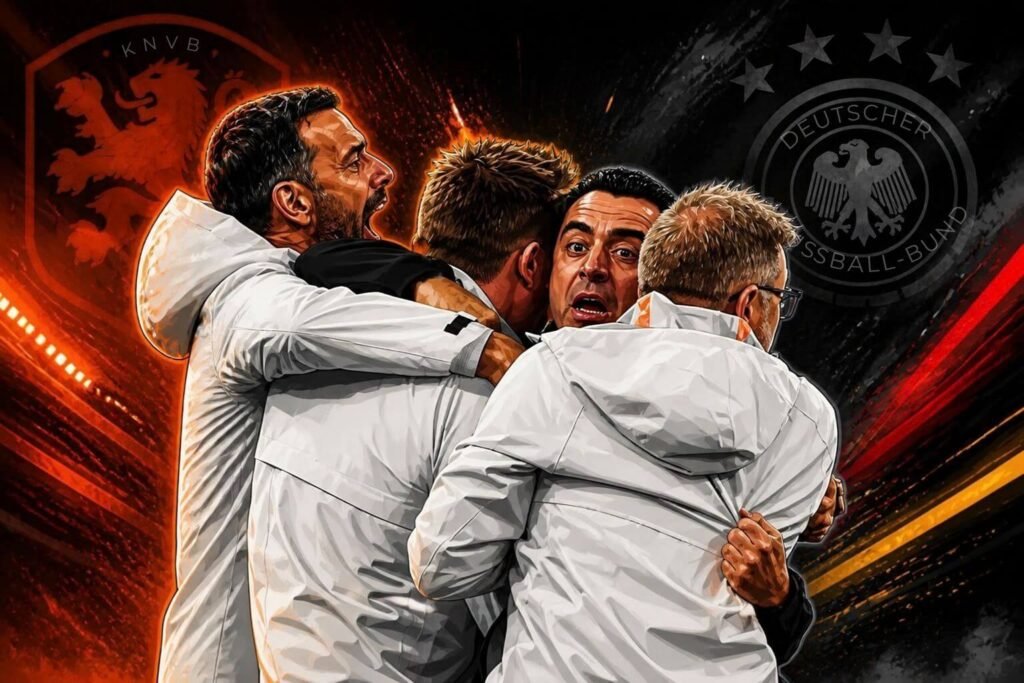
Ter Stegen Turns the Match Into a Goalkeeping Exhibition
Without Marc-André ter Stegen, Germany lose this match.
It really is that simple.
The goalkeeper made nine saves, including seven from shots inside the penalty area.
Sofascore rated him 8.9, the highest mark of the night.
His positioning repeatedly denied the Netherlands.
Dumfries broke through.
Saved.
Mexx Meerdink received opportunities inside the area.
Saved.
Ruben van Bommel tried from distance.
Saved.
Germany’s defenders were working constantly.
Nico Schlotterbeck produced eight clearances and three blocked shots.
Jonathan Tah added further interventions.
But whenever the defensive line finally broke, ter Stegen was there.
The Netherlands Created Enough to Win
The numbers became extraordinary.
22 shots.
10 on target.
12 corners.
43 touches inside Germany’s penalty area.
3.12 expected goals.
The Netherlands also won 59% of the duels and completed more passes.
Germany, meanwhile, ended the match with 29 clearances.
This was no longer an evenly balanced tactical battle.
It had become a siege.
The only thing missing was the equaliser.
Mexx Meerdink Changed the Penalty-Area Battle
Brian Brobbey’s injury forced Xavi into an early attacking change.
Mexx Meerdink entered.
His finishing was imperfect.
His impact was not.
He gave Germany’s centre-backs a different physical problem.
Meerdink attacked crosses.
Occupied defenders.
Reached dangerous shooting positions.
He also struck the woodwork and missed another significant opportunity.
The chances kept coming.
But so did the misses.
For nearly 90 minutes, it looked as though the Netherlands would leave wondering how they had lost.

Joey Veerman Added Another Creative Dimension
Xavi’s second-half substitutions also worked.
Joey Veerman entered and immediately increased the Netherlands’ quality from wide and deeper areas.
In only 33 minutes, he produced four key passes and five accurate crosses.
That mattered because Germany were defending increasingly narrow.
Veerman helped stretch them.
Dumfries continued attacking from the opposite side.
Germany had to defend the width of the pitch.
Eventually, the distances became too difficult to control.
Germany Still Had Counter-Attacking Opportunities
Klopp’s side did not spend the entire second half completely helpless.
Kevin Schade pressed aggressively.
Adeyemi continued to threaten space.
Treu found dangerous positions.
Ebnoutalib had moments where one better final action might have created a second goal.
But the pattern had changed.
Germany’s counters were isolated attacks.
The Netherlands’ pressure was continuous.
That distinction eventually decided the match.
Ruben van Bommel Makes an Immediate Impact
With seven minutes remaining, Xavi introduced Ruben van Bommel.
It was his senior Netherlands debut.
His father, Mark van Bommel, had represented the national team 79 times.
The younger Van Bommel needed less than 10 minutes to make his first major contribution.
Germany cleared another attack.
The Netherlands recycled possession.
Van Bommel found space on the right.
He delivered.
Gakpo was waiting.
Gakpo Breaks German Hearts in the 92nd Minute
The clock had entered stoppage time.
Germany were almost there.
Van Bommel’s delivery arrived into the area.
Gakpo adjusted his body.
Volley.
Past ter Stegen.
Netherlands 1-1 Germany.
After nine saves, even Germany’s goalkeeper could not stop the tenth effort on target.
The Johan Cruijff Arena exploded.
Xavi celebrated his first Netherlands goal as coach.
Klopp could only watch victory disappear at the last possible moment.
There was also something almost poetic about the scorer.
Klopp spent years working with Gakpo at Liverpool.
Now, in his first match as Germany manager, the Dutch forward denied him victory.
Football has a sense of humour.
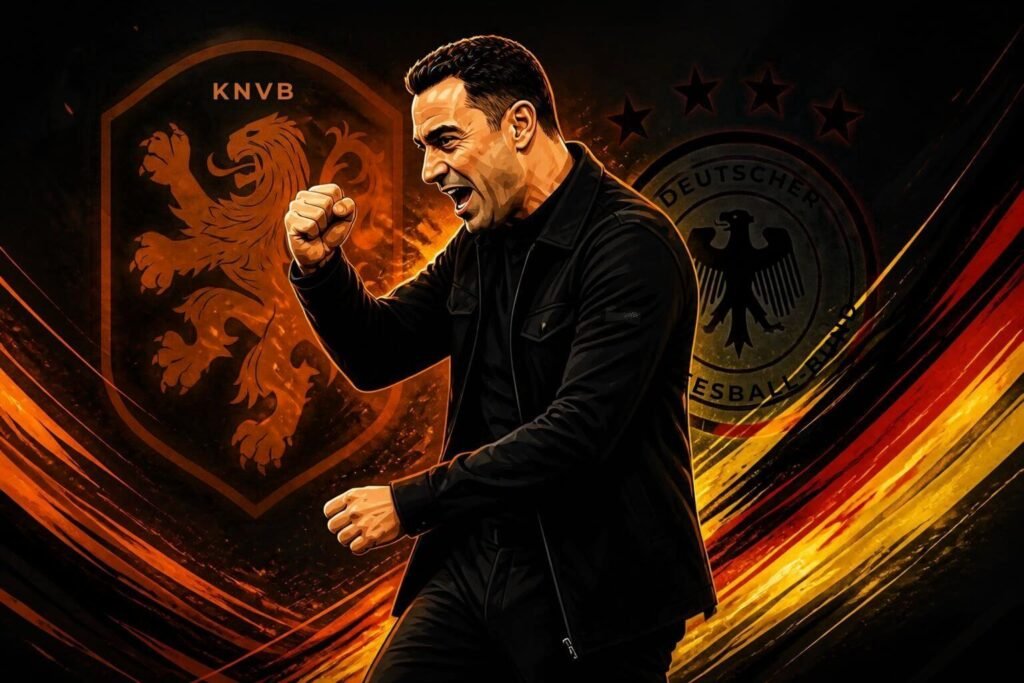
Germany’s First Half Offers Klopp Encouragement
The late equaliser should not erase what Germany did well.
Their opening pressure was effective.
Their transitions caused problems.
Kimmich was secure in possession, completing 51 of 53 passes.
Nmecha produced a strong midfield performance before being replaced.
And considering Germany were without Jamal Musiala before kick-off and lost Havertz during the first half, there were positive signs.
Klopp is introducing a new international structure.
That will take time.
His first 45 minutes suggested Germany can become extremely uncomfortable to play against.
But Germany Cannot Defend Like This for 45 Minutes
That is the other side of the analysis.
Germany produced only two shots on target all night.
Neither came after half-time.
They surrendered 12 corners.
Allowed 10 shots on target.
And required nine goalkeeper saves.
Elite teams sometimes have to defend.
There is nothing wrong with that.
But defending deep for almost an entire half is different from controlling a lead.
Germany did not control the second half.
They endured it.
Against a more clinical Netherlands team, the score could easily have become 2-1 or 3-1.
That is Klopp’s first major lesson.
Xavi Can Be Encouraged by the Response
The Netherlands also began a new managerial era.
Xavi Hernández had spoken before the match about wanting his team to play with intensity and initiative.
The second half showed exactly that.
His team did not panic.
They continued building attacks.
They used width.
They won second balls.
They increased pressure instead of resorting immediately to desperate long passes.
Most importantly, the substitutions improved the team.
Veerman provided delivery.
Meerdink provided penalty-box presence.
Van Bommel provided the assist.
That is a strong managerial debut even without the victory.
Football Today Media Verdict
Netherlands 1-1 Germany was a match of two halves.
Germany owned the first.
The Netherlands dominated the second.
Felix Nmecha gave Jürgen Klopp the start he wanted.
Germany pressed aggressively, attacked transitions and created the better first-half chances.
But after the interval, control disappeared.
The Netherlands produced:
22 shots.
10 on target.
3.12 xG.
12 corners.
Germany survived because Marc-André ter Stegen produced an outstanding goalkeeping performance.
For 91 minutes, it appeared enough.
Then Cody Gakpo arrived.
For Xavi, the equaliser was the minimum reward his team deserved.
For Klopp, the draw contained both encouragement and warning.
Germany already look capable of producing the aggressive football associated with their new manager.
But international success will require more than intensity.
It requires control.
Klopp nearly began his Germany career with a famous win in Amsterdam.
Instead, one of his former Liverpool players delivered the final twist.
Nmecha started the Klopp era.
Gakpo made sure it started with only one point.
Sources
UEFA — Nations League Matchday 1 Round-Up
Official UEFA report confirming Nmecha’s opener, Gakpo’s stoppage-time equaliser, and the opening Group A2 result.
DFB — Germany Draw on Klopp Debut
Official German FA match report covering the line-up, Van Dijk’s disallowed goal, Havertz’s injury, Nmecha’s goal, and ter Stegen’s saves.
Sofascore — Netherlands 1-1 Germany: Late Gakpo Levels
Detailed statistical analysis covering xG, shots, big chances, corners, second-half dominance, and ter Stegen’s performance.
Sky Sports — Netherlands 1-1 Germany
Independent match report covering Klopp and Xavi’s managerial debuts, Nmecha’s goal and Gakpo’s 92nd-minute equaliser.
Reuters — New-Look Netherlands Under Xavi
Background on Xavi’s appointment, tactical intentions, and the beginning of the Netherlands’ new era.