


























There is football banter.
There is provocation.
And then there are moments that should never be defended as part of the game.
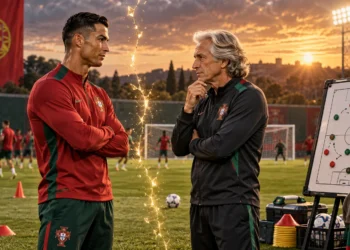
Cristiano Ronaldo has called for lifetime stadium bans after Rúben Neves was targeted by chants referencing the late Diogo Jota during Al-Hilal’s Saudi Pro League match against Al-Taawoun.
The incident occurred during Al-Hilal’s 6-0 victory, when sections of the home crowd could be heard chanting Jota’s name as Neves prepared to take a free-kick near the stands.
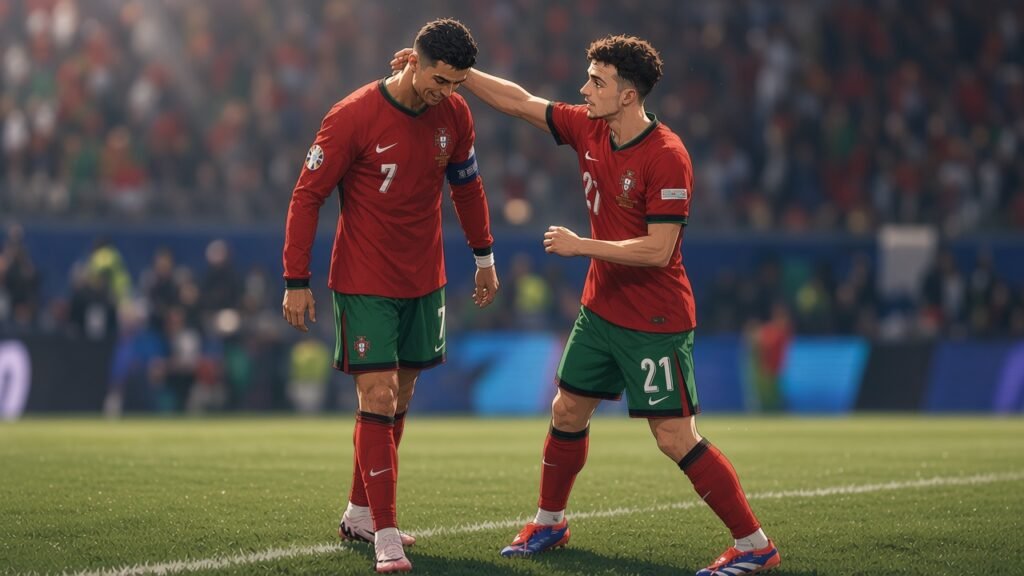
Neves, one of Jota’s closest friends and former teammates, reacted visibly. He appeared to sarcastically applaud the supporters before pointing towards the sky and then back towards the crowd.
Ronaldo’s response was uncompromising.
The Portugal captain said the league must take action and argued that supporters responsible for behaviour of this kind should never be permitted inside a football stadium again.
According to Reuters, Al-Hilal filed a formal complaint, while Al-Taawoun, the Saudi Pro League, and the Saudi Arabian Football Federation all condemned the incident.
This story is bigger than one chant.
It raises a much more important question.
What exactly should football still be willing to tolerate in the name of rivalry?
What Happened to Rúben Neves?
The incident unfolded during Al-Hilal’s dominant away victory against Al-Taawoun.
Al-Hilal won 6-0, but the scoreline quickly became secondary once footage from the stands began circulating.
Neves was positioned close to the Al-Taawoun supporters when repeated chants of “Jota” became audible.
The intent appeared clear.
They were not celebrating Diogo Jota.
They were attempting to unsettle Neves by invoking the name of a close friend who had died.
That context is essential.
This was not ordinary terrace abuse.
It was not mocking a missed penalty, a transfer, a defeat or a rivalry.
It targeted grief.
And that is precisely why the reaction has been so strong.
Why Diogo Jota’s Name Carries Such Weight
Diogo Jota died in a road traffic accident in Spain in July 2025, alongside his brother André Silva.
He was only 28.
Liverpool later retired his No. 20 shirt across the men’s team, women’s team and academy, making the tribute permanent across the club.
You can read Liverpool’s official tribute here: Diogo Jota: Forever Our Number 20.
That decision reflected how deeply Jota’s death affected the club.
He was not remembered simply as a talented forward.
He was remembered as a teammate, friend, husband, father and major part of Liverpool’s recent history.
For Neves, the connection was even more personal.
The two had been teammates at Wolverhampton Wanderers and with Portugal, and their friendship extended far beyond football.
That changes the meaning of the chants completely.
If the intention was to provoke Neves emotionally, then the supporters were not targeting a football weakness.
They were targeting bereavement.
Ronaldo Draws a Clear Line
Ronaldo responded publicly and forcefully.
He argued that the behaviour crossed the boundaries of football and called on the Saudi Pro League to severely punish those responsible.
His position was not ambiguous.
Supporters who deliberately use personal tragedy in this way, he argued, should lose the privilege of entering stadiums.
That is a significant stance coming from one of football’s most recognisable figures.
Ronaldo has spent more than two decades in some of the most hostile environments in elite football.
He has played in El Clásico.
Manchester derbies.
Champions League knockout matches.
International rivalries.
He understands perfectly well that supporters provoke players.
His argument is not that football crowds should become quiet or sanitised.
It is that certain subjects should remain outside the contest.
That distinction matters.

Football Needs Banter — But Not Everything Is Banter
Football without hostility would lose part of what makes it emotionally powerful.
Away supporters mock home supporters.
Fans chant about rival clubs.
Players are booed.
Former players are whistled.
Mistakes are celebrated.
All of that comes with competitive sport.
But the word “banter” has sometimes become an excuse for behaviour that should be judged on what it actually is.
Cruelty does not become harmless merely because it happens inside a stadium.
If a chant deliberately exploits the death of someone’s close friend in order to cause distress, then the sporting context does not neutralise the act.
This is where Ronaldo’s argument becomes difficult to dismiss.
There has to be a line.
Otherwise football effectively accepts that buying a match ticket grants a person temporary exemption from basic human standards.
It does not.
Are Lifetime Bans Too Severe?
This is where the debate becomes more complicated.
Condemning the chants is easy.
Deciding the correct punishment is harder.
A lifetime stadium ban is one of the most severe sanctions available to football authorities.
There are legitimate questions about proportionality.
Should every participant receive the same punishment?
How should individuals be identified?
Should someone who joins a chant once receive the same sanction as someone who organises sustained abuse?
Should permanent bans include an appeal process?
Those are reasonable questions.
But they should not distract from the central point.
Football authorities need punishments strong enough to change behaviour.
Temporary bans can sometimes become little more than symbolic gestures.
If fans believe the worst consequence for deliberately targeting bereavement is a short stadium suspension, deterrence becomes weak.
Ronaldo’s demand is therefore valuable even if authorities ultimately adopt a more graduated punishment.
He has pushed the conversation away from vague condemnation and toward real consequences.
The Saudi Pro League Faces an Important Test
The response from Saudi football authorities now matters.
According to Reuters, the Saudi Pro League and Saudi Arabian Football Federation issued a joint condemnation and made clear that exploiting personal tragedies for provocation is unacceptable.
Al-Hilal lodged a formal complaint.
Al-Taawoun also condemned the behaviour and pledged to cooperate with the investigation.
Those are appropriate first steps.
But statements are the easy part.
The real measure will be enforcement.
Modern stadiums have extensive CCTV coverage.
Ticketing systems are increasingly digital.
Clubs and authorities are far more capable of identifying individual spectators than they were 20 years ago.
If investigators establish who participated, meaningful sanctions should follow.
Otherwise the condemnation becomes performative.
The Saudi Pro League has invested heavily in building global credibility.
That project cannot be limited to signing famous players.
Reputation is also shaped by how a competition handles difficult moments.
This is one of them.
Neves’ Reaction Should Not Be Overlooked
There is another element to this story that deserves attention.
Neves continued playing.
That sounds obvious.
It was not.
Elite footballers are often expected to absorb abuse as though emotional immunity is part of their profession.
It is not.
Athletes can be wealthy, successful and mentally strong while still being affected by grief.
The chant was designed precisely because supporters believed Jota’s death remained emotionally painful for Neves.
That is what makes the incident particularly disturbing.
Neves’ response was controlled.
He did not lose his composure completely.
He did not allow the incident to consume the match.
That does not mean the abuse should be minimised.
It means the responsibility lies with the people who caused it, not with the player expected to tolerate it.
Jota’s Memory Should Not Become a Weapon
Liverpool’s decision to retire Jota’s No. 20 shirt provides a striking contrast with what happened in Saudi Arabia.
One side of football has attempted to preserve his memory.
Another small section of supporters attempted to weaponise it.
Liverpool described Jota as “forever our number 20”, permanently retiring the shirt after consultation with his family.
That tribute represents what football can do well.
Clubs can create collective memory.
Supporters can honour players long after their careers end.
The chants directed at Neves represent the opposite.
A person’s death became ammunition.
Football should be capable of recognising the difference immediately.
Ronaldo’s Intervention Matters Because of His Influence
Ronaldo did not need to involve himself publicly.
The incident affected Neves directly, and the league could have dealt with it internally.
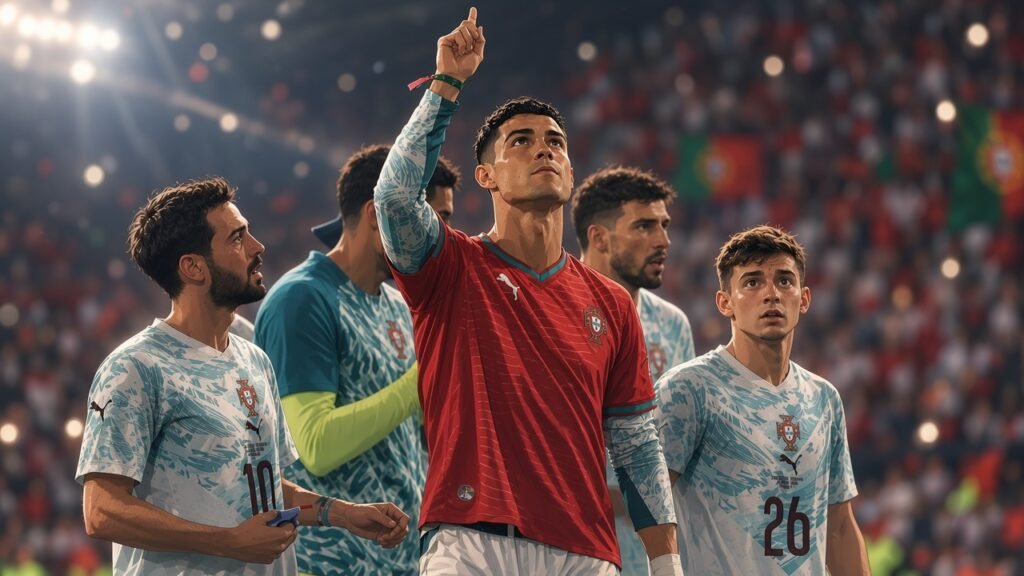
Instead, Ronaldo amplified the issue globally.
That matters.
Few footballers possess his reach.
When Ronaldo speaks about a disciplinary issue, it instantly becomes an international football story.
That increases pressure on authorities to respond meaningfully.
There is also a personal dimension.
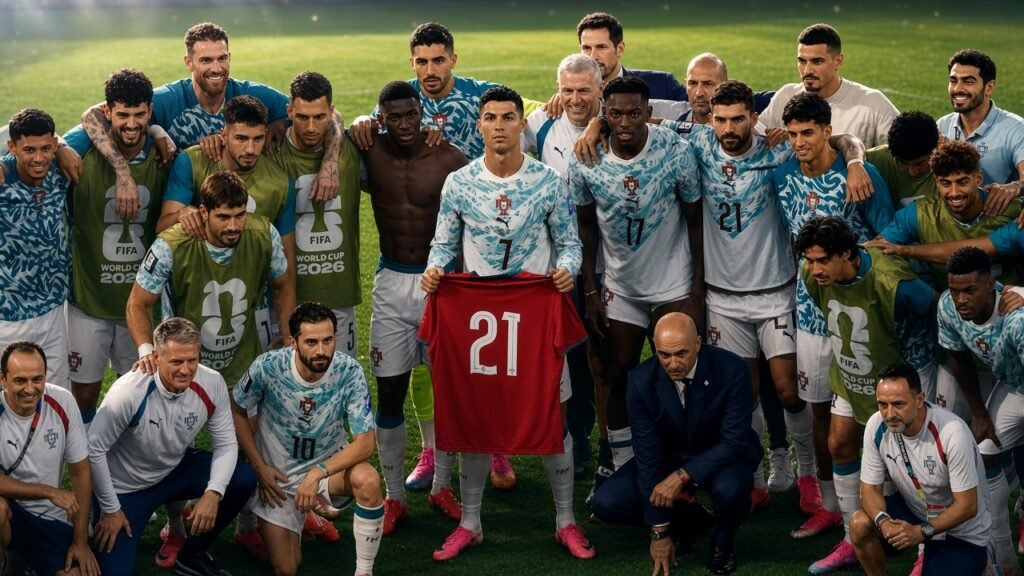
Ronaldo played alongside both Jota and Neves for Portugal.
This is not an outsider commenting on an abstract controversy.
It involves two members of his international football family.
That perhaps explains the force of his response.
This Is About More Than Saudi Football
It would be a mistake to frame the incident as exclusively a Saudi football problem.
Football has a long history of chants involving disasters, deaths, tragedies and personal abuse across multiple countries.
That does not excuse what happened.
It makes the conversation more important.
English football has repeatedly dealt with tragedy-related chanting.
European competitions have faced racist, sectarian and discriminatory abuse.
Players have been targeted over family members, illness and bereavement.
Different leagues may require different disciplinary systems, but the underlying principle should be universal.
A football stadium should not become a place where grief is considered legitimate sporting ammunition.
Stronger Punishment Could Change Fan Culture
Football authorities often speak about education.
Education matters.
But consequences matter too.
The reason certain types of stadium behaviour have declined over time is not simply that society became more enlightened.
Clubs introduced bans.
Leagues introduced fines.
Police became involved.
Supporters understood that actions carried consequences.
The same approach can apply here.
Lifetime bans may be the maximum rather than the automatic punishment.
But authorities need the courage to use serious sanctions when behaviour becomes deliberately dehumanising.
Otherwise the phrase “football has limits” means very little.
Football Today Media Verdict
Cristiano Ronaldo is right about the most important part of this debate.
There has to be a line.
Football supporters should be passionate.
They should create intimidating atmospheres.
They should provoke rivals.
They should celebrate loudly and make away grounds uncomfortable.
That is part of football.
Using the death of a player’s close friend to cause emotional pain is not.
Whether every supporter involved deserves an automatic lifetime ban can be debated.
What should not be debated is whether serious punishment is necessary.
It is.
Diogo Jota was a footballer, teammate, husband, father, brother and friend.
His death should not become material for terrace provocation.
Rúben Neves should not be expected to accept it simply because he earns a living playing football.
And leagues should not hide behind generic statements when clear lines are crossed.
Ronaldo’s words have forced the Saudi Pro League to confront that reality.
Now the responsibility moves from the player to the authorities.
If football truly believes some things are bigger than the game, this is the moment to prove it.
Sources
Reuters — Ronaldo Calls for Lifetime Bans After Jota Chants Aimed at Neves
Read the Reuters report
Liverpool FC — Diogo Jota: Forever Our Number 20
Read Liverpool’s official tribute
The Independent — Ronaldo Demands Lifetime Stadium Bans
Read The Independent report