

























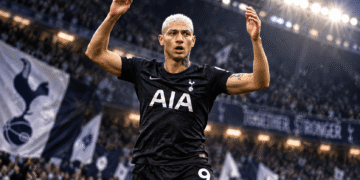




Atlético Madrid did not just beat Osasuna.
They controlled them, stretched them, wore them down, and eventually overwhelmed them.
Diego Simeone’s side produced one of their most complete performances of the season with a 4-0 victory at the Riyadh Air Metropolitano, continuing their sharp improvement after a difficult opening period of the campaign.
Jonathan David opened the scoring and continued his excellent start to life in Madrid.
Kang-in Lee doubled the advantage after the break.
Robin Le Normand added the third.
And Álex Baena completed the rout.
The final score was emphatic.
The performance was even more encouraging.
For much of this season, Atlético have looked like a team still trying to discover exactly what their new-look squad should become.
Against Osasuna, the picture finally looked much clearer.
They pressed with purpose.
They moved the ball quickly.
They attacked from both sides.
And most importantly, they controlled the spaces that had previously made them vulnerable.
Atlético Madrid 4-0 Osasuna was more than three points. It looked like a team beginning to understand itself.
Atletico Madrid vs Osasuna: Match Snapshot
| Match Detail | Information |
|---|---|
| Final Score | Atlético Madrid 4-0 Osasuna |
| Competition | LaLiga |
| Venue | Riyadh Air Metropolitano |
| Atlético Scorers | Jonathan David, Kang-in Lee, Robin Le Normand, Álex Baena |
| Standout Player | Jonathan David |
| Key Tactical Theme | Atlético combined aggressive pressing with width and quick central combinations to overwhelm Osasuna |
| Major Defensive Story | Atlético kept a clean sheet and limited Osasuna’s sustained attacking threat |
| Result Impact | Another strong victory before the Madrid derby |
| Manager | Diego Simeone |
Atlético Started With Intent
The opening 10 minutes were relatively quiet.
Then Atlético increased the tempo.
And once they did, Osasuna struggled to slow them down.
Ademola Lookman began stretching the defence from wide areas.
Kang-in Lee drifted into central pockets.
Alejandro Grimaldo pushed aggressively from the left.
Cristian Romero carried possession forward from defence.
The most important aspect was the spacing.
Atlético did not attack with everyone occupying the same central zones.
They spread Osasuna across the pitch first.
Then they attacked the gaps created between defenders.
That was a significant tactical improvement.
Earlier in the season, Simeone’s side sometimes looked crowded in possession.
Against Osasuna, they looked organised.
Every attacking player appeared to understand where the next space would appear.

Jonathan David Delivers Again
Jonathan David was rewarded with an opportunity.
He took it.
The Canadian striker opened the scoring after Aitor Fernández initially denied his first attempt.
David reacted quicker than anyone around him and converted the rebound from close range.
1-0 Atlético.
It was not the most spectacular goal of the night.
It may have been the most important.
For a striker trying to establish himself at a new club, these are exactly the moments that matter.
David had already scored against Real Sociedad.
Now he had another goal.
Two strong appearances in quick succession.
And suddenly Atlético’s attacking hierarchy looks much more interesting.
David gives Simeone something his team has often lacked.
A natural penalty-box striker who attacks situations immediately.
He does not need to dominate possession.
He does not need 20 touches around the box.
He needs one opening.
That makes him extremely useful.
Why Jonathan David Changes Atlético’s Attack
Simeone has spent years working with forwards capable of playing between the lines.
That has advantages.
But sometimes Atlético have needed someone who simply stays close to goal.
David provides that.
He occupies centre-backs.
He makes runs across them.
He attacks rebounds.
He arrives where goals are scored.
That changes the responsibilities of everyone around him.
Kang-in Lee can drift deeper.
Baena can operate between lines.
Lookman can attack from wider starting positions.
Grimaldo can overlap.
None of them need to become the striker.
David remains there.
It sounds simple.
But good attacking structures often depend on simple responsibilities being clearly defined.
Against Osasuna, they were.

Osasuna Had a Warning of Their Own
The match was not completely one-sided in the opening half.
Jan Oblak had to remain alert.
Osasuna also briefly believed they had found a way back into the contest when the ball entered Atlético’s net, but the effort was disallowed following a foul in the build-up.
Lucas Torró was judged to have fouled Le Normand during the sequence.
That decision denied Osasuna a potentially important equaliser.
But Atlético’s response mattered more than the controversy.
They did not lose concentration.
They did not retreat.
They continued attacking.
That is something this team has not always done.
Atlético Should Have Been Further Ahead
If Simeone had one criticism at half-time, it would have been the score.
Atlético were creating too much to lead by only one.
Kang-in Lee forced Aitor Fernández into action.
David was denied again.
Baena curled an effort narrowly wide.
Romero threatened from set-piece situations.
The home side were repeatedly reaching dangerous areas.
The goalkeeper was keeping Osasuna alive.
That is where the second-half performance became particularly impressive.
Atlético did not become frustrated.
They increased the pressure.

Kang-in Lee Makes It Two
The second goal arrived after the restart.
And this one perfectly represented Atlético’s improvement in attacking structure.
The move developed quickly.
Players combined centrally.
Osasuna were forced backwards.
Kang-in Lee received the opportunity and drove a low finish into the corner.
2-0.
The South Korean midfielder had been one of Atlético’s most influential players throughout the match.
His movement created constant problems.
He could begin wide.
Then move inside.
Then appear around the box.
Osasuna could never quite decide who should follow him.
That is exactly the type of positional uncertainty elite attacking midfielders create.
If a full-back follows him inside, space opens wide.
If a midfielder picks him up, Atlético create another passing lane.
If nobody tracks him, he shoots.
Osasuna chose the third option too often.
They paid for it.
Kang-in Lee Gives Simeone Another Dimension
Kang-in’s role may become particularly important this season.
Atlético have often been associated with vertical attacks, defensive organisation and rapid transitions.
Those qualities remain.
But this squad contains more technical midfielders than some previous Simeone teams.
Kang-in offers close control.
He offers creativity.
He receives under pressure.
And he can manipulate compact defensive blocks.
That could make Atlético more dangerous in matches where opponents refuse to leave space.
Osasuna tried to stay compact.
Kang-in kept finding ways through.

Le Normand Turns Control Into Dominance
The third goal changed the feeling of the night.
At 2-0, Osasuna still had theoretical hope.
At 3-0, the contest was effectively finished.
Robin Le Normand produced the goal.
The centre-back attacked the situation aggressively and found the net to make it 3-0.
His contribution was particularly satisfying from Simeone’s perspective because Le Normand had also been central defensively.
The clean sheet mattered.
The goal was a bonus.
It also highlighted another area where Atlético looked dangerous.
Set pieces.
When teams become difficult to stop both from open play and dead-ball situations, the pressure becomes constant.
Osasuna could not escape.
Cristian Romero Was a Defensive Monster
Cuti Romero deserves major credit.
The scoreline naturally pushes attention toward the forwards.
But Atlético’s performance was built on defensive aggression.
Romero repeatedly won duels.
He stepped forward confidently.
He prevented Osasuna from holding possession comfortably.
And because he was willing to defend aggressively away from his own penalty area, Atlético’s midfield could stay higher.
That is tactically important.
A passive centre-back forces the entire team backwards.
An aggressive one allows the block to stay compressed.
Romero gave Atlético that confidence.
He also threatened offensively with a long-range strike.
This was the kind of performance that explains why Simeone values defenders who can do more than simply defend their own box.

Atlético’s Press Looked Much Better
This may have been the biggest tactical improvement.
Atlético pressed as a unit.
Not as individuals.
When Osasuna played short from the back, David closed the first option.
The midfield shifted behind him.
Wide players closed the outside lanes.
The back line stepped forward.
That compressed the pitch.
Earlier this season, Atlético occasionally pressed without enough support.
One player would jump.
Another would stay.
The opposition could pass through.
Against Osasuna, the movement was synchronised.
That changed everything.
Instead of Osasuna escaping pressure, Atlético recovered possession in advanced areas.
That created attacks before the defence could reorganise.
Álex Baena Completes the Rout
Álex Baena made it four with a lovely first-time finish inside the penalty area.
4-0.
At that point, the result accurately reflected the performance.
Baena’s goal also underlined the variety in Atlético’s attacking threat.
David scored as a striker.
Kang-in scored through midfield movement.
Le Normand contributed from defence.
Baena finished from an advanced creative position.
Four goals.
Four different types of player.
That matters.
If a team depends on one scorer, opponents can build a plan around stopping him.
Atlético suddenly look much harder to predict.
Baena Is Becoming More Important
Baena may be one of Simeone’s most important players this season.
He brings something Atlético have occasionally lacked in recent campaigns.
Final-third imagination.
He sees passes early.
He arrives around the box.
He can shoot.
And he gives Atlético a player capable of producing something unexpected against compact opponents.
That is particularly important when games become slow.
Simeone has enough runners.
He needs creators too.
Baena provides that balance.

Simeone’s Rotations Worked
Simeone changed his team.
The level remained.
That may be one of the biggest positives of the evening.
Jonathan David was trusted.
Le Normand returned.
Different midfield combinations were used.
Later substitutions maintained the tempo.
This is exactly what Atlético will need if they want to compete across several competitions.
The squad cannot depend on one fixed XI.
LaLiga is too demanding.
The Champions League is too demanding.
The calendar is too crowded.
Simeone needs options.
Against Osasuna, he looked like a manager who finally has them.
The Timing Could Not Be Better
Atlético’s next major test is much harder.
Real Madrid are coming.
That gives this result extra significance.
A 4-0 victory naturally builds confidence.
But the performance matters more than the score.
Atlético looked physically sharp.
They looked defensively organised.
They created chances from different areas.
And they kept another clean sheet.
Those are exactly the qualities required for a derby.
Real Madrid possess far greater individual quality than Osasuna.
They will punish spaces more aggressively.
They will attack transitions faster.
Simeone knows that.
But Atlético can enter the derby believing their system is beginning to work.
That matters psychologically.
Atlético’s Season May Be Turning
The beginning of the campaign created questions.
There were disappointing results.
There were defensive issues.
There was uncertainty around the squad.
The new signings needed time.
Now the direction looks different.
Atlético beat Real Sociedad convincingly.
Then they returned home and scored four against Osasuna.
More importantly, the performances are beginning to look repeatable.
This is not simply individual brilliance.
There is structure.
That is always the point when Simeone teams become dangerous.
Football Today Media Verdict
Atlético Madrid’s 4-0 victory over Osasuna was the kind of performance that changes the conversation around a team.
Not because Osasuna are one of LaLiga’s strongest opponents.
They are not.
But because Atlético looked complete.
Jonathan David gave them a focal point.
Kang-in Lee gave them creativity.
Baena gave them invention.
Grimaldo provided width.
Romero provided aggression.
Le Normand helped deliver another clean sheet.
And Simeone finally had attacking options capable of maintaining intensity from the first minute to the last.
That is significant.
For years, Atlético’s identity has been discussed almost exclusively through defence.
This version looks capable of becoming something broader.
They can still defend.
But they can also overwhelm.
They can press.
They can create.
They can attack in waves.
And they can score through multiple players.
The derby against Real Madrid will provide a much tougher examination.
But Atlético could hardly have prepared better.
Four goals.
A clean sheet.
A striker finding form.
A midfield beginning to click.
And a Metropolitano that finally saw exactly what this new Atlético team could become.
The next test is Real Madrid.
Now we find out how real this improvement is.
Sources
Flashscore — Atlético Madrid 4-0 Osasuna Match Report
Detailed match report covering Jonathan David’s opener, Kang-in Lee’s performance, Le Normand’s goal, and Álex Baena completing the scoring.
AS — Atlético Madrid 4-0 Osasuna Player Ratings
Analysis of Atlético’s individual performances, including Jonathan David, Cuti Romero, Kang-in Lee and Baena.
Atlético Madrid — Official Club Website
Official club coverage and team information surrounding the Osasuna fixture.